

Elizabeth the Second
While several of Elizabeth Simcoe’s granddaughters attempted to maintain her values in a changing world, perhaps none managed to do so more closely than her namesake, Elizabeth Simcoe (1828-1907). Christened Elizabeth Lethbridge, she was the third of the Rev. Henry Addington Simcoe’s daughters.
Curiously, Henry and his first wife Anne chose to name their eldest daughter Anne Eliza, to honour the sister who had done so much to support him emotionally and intellectually in childhood and youth. The nod to his mother had to wait. Elizabeth II would, in her two marriages, replicate her grandmother’s need to support God and King – and to stand up (with just as much determination) for her rights. But she lived in different times; those values were increasingly under fire, and the fascinating trajectory of her life illustrates the new problems.
Elizabeth Simcoe (the younger) lived at Penheale with her father and stepmother long after her older sisters had married and moved on. She seemed destined to become that dutiful spinster daughter who stayed behind to care for aging parents.
But then, at the age of 31, she made a surprising decision. She married a man almost twenty-five years her senior, a widower with a son only seven years younger than she. As it would transpire, the young man was clearly unhappy about developments. The groom, however, seems to have been quite pleased at the opportunity to make a break from his old life – a life that in many ways mirrored that of the bride’s grandfather in military contribution to empire.


Colonel Willoughby Trevelyan was a battle-hardened veteran of the East India Company’s service. He had been at the heart of the British attempt to hold India and, as the youngest brigadier in the Indian service (aged 51), was in command at Rajkot when the Indian Rebellion erupted. He was there when the East India Company’s rule over India ended in 1858. He was a servant of an old system that the empire no longer wanted.
His first wife, Anne Mary Astley, had fought and lost battles of her own in India. First, a baby had died a few weeks after birth, as did so many children of English mothers there. Years later, she had learned with helpless horror that her sole surviving son had been part of the infamous “Charge of the Light Brigade” in the Crimean War. Although shot in the leg, he had survived when so many others had not. But there was hidden damage. Not long afterward, Mrs. Trevelyan died at Mumbai at just 46, her service to the empire unrecorded and eventually forgotten.

The Trevelyan family roots were in Cornwall although Willoughby was the well-connected son of the vicar of Henbury, Gloucestershire; Willoughby’s paternal grandfather was a baronet. The general’s first wife was also a child of the cloth. One of Willoughby’s brothers and a cousin were, like him, senior officers in the East India Company’s service. Another cousin was appointed governor of Madras in 1858.
When the rule of the East India Company was transferred to the crown that year, Willoughby retired and returned to England. He spent a good deal of time at Bath where he had relatives. He likely met Elizabeth Simcoe here. And they likely discovered shared acquaintance. His cousin Charles Trevelyan, before his appointment to the governorship of Madras, had collaborated with Simcoe family friend Sir Stafford Northcote in producing a report that led to the modernisation of the English civil service.[1] Willoughby’s extended family had connections with the Clapham Evangelicals, as did hers. The couple also shared social networks in Somerset and Scotland. And they clearly understood the connections between the pillars of religion and military that supported the British empire.
The newlyweds moved to Scotland, undoubtedly because of the groom’s connections there. Among other things, his sole surviving son had been born at Stirling. They purchased a small estate near the village of Glenfarg and hired a well-known architect from nearby Perth. Andrew Heiton would build them a fine new house that they called Newfargie.[2]

Like the manor house that Elizabeth I had commissioned, it was beautifully situated on a hill with a fine view (in this case, of the Tay River valley). Elizabeth II would be the mistress of a much smaller estate, in keeping with the realities of her generation, but it gave the couple the status of local gentry. They leased some of the land to local farmers, bred and raised cattle, and tended extensive gardens.
The property purchase also made them owners of the Bein Inn, a handsome and convenient stopping place for coaches on the main road north from Edinburgh to the Highlands and beyond. It was run by a Mrs. Ewan who had been the landlady for nearly forty years, although she retired soon after they took possession. The Trevelyans replaced her with a “spirit” dealer from Perth. The Bein Inn would now do a roaring business in supplying drink to local folk.

At Newfargie, the Trevelyans would be escaping not only the demands of the military career of the man now known as the General but they were also avoiding a developing crisis with his son.
Harrington Astley Trevelyan was a career army officer like his father. A few months before Trevelyan senior remarried, Elizabeth’s future stepson had married too. The bride was underage and six months pregnant. The ceremony was held at Brighton; a liberal use of imagination is evident in the particulars that the couple provided for the registry. The bride, Louisa “Harison,” was not the daughter of a gentleman as they claimed, but a dancer who had been performing at the Princess’s Theatre in London.

Their baby was born in London three months later, then the couple shipped off to India where Harrington Trevelyan was now a senior officer with the 7th Light Dragoons (Hussars).

Things do not seem to have gone well for the family in India. After a few years, Colonel Trevelyan decided to retire. A second daughter was born off the coast of Egypt on the way home.
Things did not improve back in London. Among the problems, there seem to have been financial difficulties even though Harrington was receiving a colonel’s half pay, an allowance of £2500 per year from his father, and the income from an estate that he had inherited from his mother. Exactly where the money was going is not evident in the record. Given subsequent revelations, it might very well have been at the racetrack.
Early in 1871, General Willoughby Trevelyan died at Newfargie. Elizabeth was widowed at just 43, almost exactly the age of her grandmother when General Simcoe died. She inherited the house and its connected properties. Her stepson Harrington was not mentioned in the will; his father considered that Harrington had been amply provided for out of his mother’s estate.
Furious, Harrington launched legal proceedings against Elizabeth, arguing that he was entitled to one third of the estate regardless of the wording of his father’s will. She defended her rights vigorously, at some expense both financial and emotional. The case dragged on for several years – not quite the Jarndyce v. Jarndyce of the Dickens classic, but something of note in legal circles because it raised the question of differences in law between Scotland and England. In the end, Elizabeth (Simcoe) Trevelyan kept her house.
Things went from bad to worse for her stepson. And the implosion of his life captured newspaper headlines in those publications inclined to salacious gossip. It must have been an excruciating embarrassment for Elizabeth. But it also represented a moment in shifting public attitudes toward married women’s rights.

In 1875, four years after his father’s death, Harrington and Louisa Trevelyan separated, drawing up a support agreement in which Harrington’s army friend, Lord Marcus Beresford, was named as “trustee” – a sort of administrative go-between. Beresford was a curious choice on several grounds. Besides the fact that he was Harrington’s friend and thus hardly a neutral party, he was also a notorious man-about-town who spent much of his time at racetracks as a jockey on his own horses or making wagers on everyone else’s. He was also a notorious womanizer: the kind of man who appeared regularly in the gossipy columns of Vanity Fair.[3]
The separation agreement included a provision of £400 per year for Louisa while the couple’s two daughters (now 5 and 15) were sent to live elsewhere. After a few years, however, Harrington reduced his wife’s allowance, then stopped paying it entirely. He alleged that Beresford and Louisa had formed an “improper” relationship and that she was running up debts, contrary to the separation agreement. Louisa was having none of it and began a campaign to recover her support money.
In August 1883, Lord Beresford laid a complaint against Harrington Trevelyan on Louisa’s behalf; Trevelyan laid a countersuit, asking the court to set aside the separation agreement entirely on the grounds that Louisa had breached its conditions. The court found in her favour, but Beresford was able to obtain from Trevelyan only £75 of the amount owing. Beresford announced that he would provide her with a weekly allowance out of his own pocket until a permanent arrangement could be reached with Trevelyan’s solicitor. It appears that Trevelyan had decided that life abroad would be more pleasant, particularly now that the press had picked up the story and was delighting in the glimpse it provided into the sordid lives of the aristocracy.
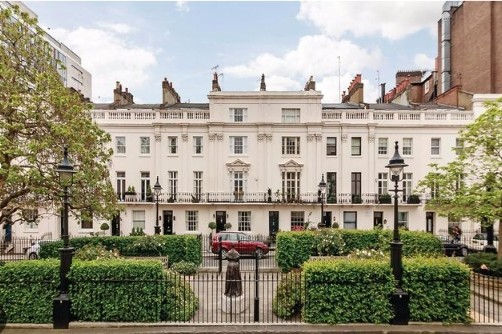
Louisa Trevelyan did not feel that she was being treated fairly by anyone. She began demanding redress with noisy visits both to Beresford’s London home and his solicitor’s office. Beresford was fed up. In December 1883, Louisa was charged with disorderly conduct for creating a disturbance in the square outside his fashionable residence. She told the court that she was living “in great poverty and distress” with no home other than with a friend who had taken her in. The judge was not sympathetic and called her “an excitable woman,” to which she objected vociferously and fearlessly. In the end, she was discharged with a caution. She promptly ignored it.
A few weeks later, she was back in court, this time as the complainant. She had accused a police constable of using unnecessary force when he was called to the solicitor’s office where she was, yet again, demanding to be heard. The constable was acquitted and she was ordered to pay 40 shillings in costs. The story was gaining traction in the press; readers as far off as New Zealand could now raise their eyebrows over the details.
That spring, Louisa was charged yet again with creating a disturbance outside Lord Beresford’s town residence. She had been reduced to living in the Marylebone workhouse and only wanted what was legally hers. The police court magistrate remanded her in custody but for the first time, an official thought some questions needed proper answers and the magistrate strongly hinted that he wanted Lord Beresford and Colonel Trevelyan to appear at the trial. Trevelyan’s solicitor claimed that his client had been "compelled to leave England through the persecution of his wife,” and “if she would go abroad, and leave him free to live in England, he would allow her £100 a year.”[4] There was no-one to champion Louisa’s cause.

Over the years that followed, Louisa Trevelyan seems to have floated between the workhouse and prison. She began drinking heavily and suffered a mental breakdown. And she never stopped demanding better, even arriving at the Marylebone police station at one point to lay a complaint against the workhouse where she was staying. But she never did recover her money or her dignity and died in misery in a London workhouse in 1923.

Meanwhile, however, the public was becoming less interested in mocking the aristocracy and more in expressing some sympathy for her. Vanity Fair printed an account of the case in which they called her a “wretched outcast” whose husband had failed “to do his duty” by her. “This poor creature” had been wronged by the aristocracy who apparently ought to have known better. Even the courts began to change their attitudes. She was discharged early from one prison sentence by a magistrate who proclaimed, “She has suffered enough.” And yet there seemed to be no tangible solution for her tragic situation.

Harrington Trevelyan certainly did not suffer. He eventually made his way to California where he obtained a position managing a vineyard near Fresno. Here, he presented himself as a British gentleman and war hero and became a respected and admired local celebrity. He died there in 1900, aged 65.
Left: a photo of Harrington Trevelyan printed in The Graphic (London), 20 October 1900 on the occasion of his death. The photo was taken in San Francisco and the sitter identified as "one of the few survivors of the Light Cavalry Brigade." Curiously, a neighbouring portrait on the page (of another deceased man of note) is of Sir Henry Wentworth Dyke Acland, 4th son of Sir Thomas Dyke Acland, one of the "saints" in Elizabeth Simcoe Sr.'s life. Saints and sinners joined in death.
Somehow, Elizabeth Simcoe Trevelyan had managed to keep both her name and that of her late husband’s out of the press coverage. There is no evidence that she did anything to help either Harrington or Louisa. After nearly a decade of widowhood, she became, in 1880, the highly respectable Mrs. John Barton.
Her second husband would have met with her grandmother’s enthusiastic approval. The Very Reverend John Burton was a graduate of University College, Dublin. He was ordained in the Diocese of Durham in 1848 and spent his early years as a cleric in northern England before crossing the border into Scotland to take up a charge at Blairgowie and then Alyth in Perthshire.

His first wife’s family was intimately connected with Charles Kennaway of the Devon evangelical clan so important in the Simcoes’ lives. Burton and his first wife had produced twelve children (of whom at least ten were still living when Elizabeth Simcoe married him). His wife Jane (née Miniken) had died in 1870. The following year, Burton was appointed provost (lead cleric) of St. Ninian’s Cathedral in Perth. It was a bastion of Anglicanism in Presbyterian country.


John Burton was a man of both intellectual achievement and evangelical enthusiasm – exactly the kind of man Elizabeth I would have admired. Through the 1850s and 60s, when not occupied in the business of ministering to his parish or his children, he became a popular and sought-after lecturer who entertained and educated audiences on such subjects as “The Earth”, “Geology”, “Oliver Goldsmith and the Poetry of His Times”, or “Ethnology.” He published sermons and essays such as Our Protest against Rome (1869) and The Church of England Primitive and Apostolic, Pure and Scriptural, Holy and Beloved (1849). Sadly, Elizabeth Simcoe I would not have been well enough to appreciate the latter, although she undoubtedly would have delighted in its sentiments. Burton also edited and abridged the work of an American minister named Flavel Scott Mines (A Presbyterian Clergyman Looking for the Church) which was published after Burton’s death by another Anglican clergyman; it apparently sold well in Scotland where presumably it was aimed at encouraging Presbyterian “conversion” to the Church of England.
Elizabeth Lethbridge Trevelyan Burton now found herself part of a much happier family. Two of Burton’s young-adult daughters welcomed her into the home that they still shared with their father. She spent time with his youngest son, just then studying to become a clergyman himself. Two older daughters remained unmarried (in the fine Simcoe tradition) and ran a “Ladies’ School” for many years in Perth.
Perhaps less was said about the eldest Burton son, who had been ordained and stationed at St. John’s Episcopal church in Selkirk. Tragically, his wife died within a year of their marriage after giving birth to a stillborn son. Overwhelmed by grief, he resigned his charge and became a Roman Catholic. The raised eyebrows of local gossips nearly escaped their faces when they learned that he then decided to marry his housekeeper but disappeared without a word on the day planned for the ceremony – a fact that was reported in papers as far away as Ireland.
Perhaps not surprisingly, given her grandmother’s interests, the new Mrs. Burton became an enthusiastic supporter of her husband’s scientific endeavours. As a member of the Perthshire Society of Natural Science, she participated on a committee “of very distinguished patronage”[5] that organized and helped to raise funds for the construction of a fine new museum that became a centrepiece for cultural activity in Perth.

The couple also integrated into life in both town and country. She retained Newfargie House, but they also had a residence in Perth for convenience to the cathedral and the Rev. Burton’s adult children. It all may not have been on the grand scale of her grandmother’s town and country living, but it was very pleasant and comfortable indeed.
Unfortunately, just three years after the Trevelyan-Burton marriage, the Reverend John began to suffer from ill health. Now in his mid-60s, he was advised by his doctor to retire from his senior position at the cathedral. But Burton decided to soldier on. Elizabeth took him to Cornwall for extended visits, hoping that the climate and change of scene would be beneficial. His absences began to generate complaints in Perth, particularly among the cathedral clergy. But his illness was not feigned. He died quite suddenly in July 1885 at Newfargie.
Elizabeth II did not marry a third time. She lived as a widow for the last 22 years of her life and carried on as the “lady of the manor” at Newfargie.
An unfortunate combination of circumstances meant that she was never as successful at it as her grandmother had been. In part, she may simply have been a poor manager. The Bein Inn deteriorated under a constant turnover of landlords. Drunken and disorderly patrons paraded through the local court. There were allegations that liquor was being served on Sundays – which would have absolutely horrified her grandparents. One landlord was charged with short measuring the drinks. The annual liquor licence renewal process, once almost automatic, began to give authorities pause. When yet another landlord applied for the licence in 1900, the chief constable reported to the board that while the inn had been “a nice little public house” for many years, it was now “in a rather bad state of repair.” The board agreed to issue the licence only if the new landlord guaranteed some renovations.

Elizabeth also had problems attempting to assert her authority; she seems to have expected and assumed obeisance from her tenants. But these Scots were no early Victorian vassals who knew their “place.” When she tried to evict one of the inn’s landlords for failure to pay the rent, he objected and the case ended up in court. At another point, her farm-bailiff took her to court alleging wrongful dismissal. When the sheriff ruled in her favour, the bailiff appealed (although he lost a second time). Another dispute over rent ended up in court although Elizabeth Burton did not. She sent a telegram, declining to appear.
Elizabeth Simcoe Trevelyan Burton died in 1907 in her 79th year, having outlived all of Anne (Palmer) Simcoe’s nine children.
Clearly, Elizabeth Simcoe had inherited more than her grandmother’s name. She saw her place in the world in a very similar way and married into both army and church to solidify her contributions. She had a strong sense of self and the authority that she felt due to a woman of her station. She defended that authority in court on several occasions. As was her grandmother, she was widowed while still relatively young and remade herself as a single woman of substance.
But some of her old-fashioned ideas could be liabilities in a changing world. Tenants no longer acquiesced to the demands of their “betters.” Her lands and properties were respectable and still qualified her as gentry but were far less extensive than her grandmother’s – and likely also brought in far less income. And without children of her own, she does not seem to have left a legacy of memories or achievements that later generations could celebrate.
Her life and her grandmother’s are intriguing bookends to one part of the story of
nineteenth century Britain.


[1] He is also a highly controversial figure in the history of the Irish Potato Famine, but that is another story.
[2] The house was known by variations of that name over the years, but I have used Newfargie for clarity. The house is not to be confused with Newfarg House, built some years later. Both are/were buildings of note on the Scottish registry.
[3] His full name was Marcus Talbot de la Poer Beresford (1848-1922). Readers of Mrs. Simcoe: A Life in the Age of Revolution will recognize in that name some connections to other characters in the story!
[4] As reported in The North-Eastern Daily Gazette, 30 May 1884, p. 3. The proceedings were widely reported.
[5] The Perthshire Advertiser, 17 March 1881, p. 1.


Comments